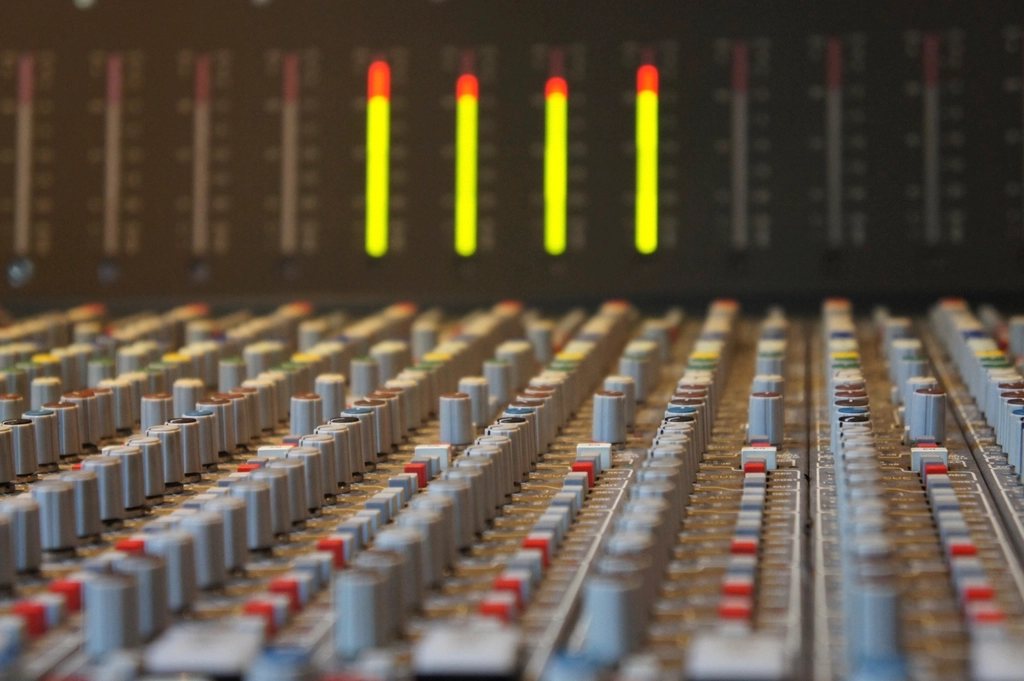
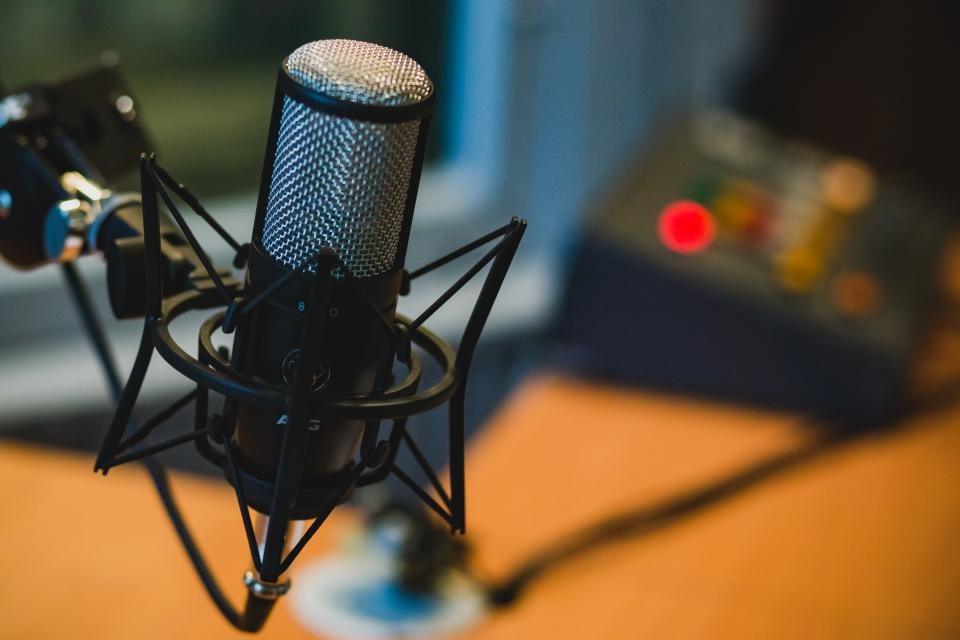
People will watch a video that looks average if it sounds good. They will not watch a beautiful video that sounds bad. This is not a preference, it is close to a rule, and it is the most consistently ignored fact in content production.
Why bad audio is unwatchable
Listening to a muddy, echoing, uneven recording takes effort. Your brain works harder to separate the voice from the room, and after a couple of minutes that effort registers as boredom. The viewer does not think the audio is bad. They think the content is boring, and they leave.
Poor video does not create that load. A slightly soft, slightly flat image is still effortless to watch. That asymmetry is the whole reason audio wins.
Both rooms here are treated and miked before you arrive, which you can see on the studio page.
What good audio actually requires
- A microphone close to the speaker, on a stand or boom, not on the table catching every knock
- A room that does not ring, which means soft surfaces and non-parallel or broken up walls
- Levels set before recording, not fixed afterwards
- One microphone per person, so nobody is leaning across a table
None of that is expensive. All of it is easy to skip when you are focused on how the shot looks.
The test that settles it
Record two minutes in the room you are considering. Close your eyes and listen back on headphones. If you can hear the room around your voice, a faint shell or a slight hollowness, the audience will hear it too. They just will not know what they are hearing.

Where this leaves video
Video still matters, because video is what makes a clip stop a thumb on a feed. But it earns attention, and audio keeps it. Get the audio right and average video is fine. Get the audio wrong and no camera saves you.
What bad audio actually sounds like
Most people cannot name what is wrong, so here is the vocabulary.
- Roomy or hollow. You are hearing the walls as much as the voice. Untreated space, microphone too far away.
- Boxy. A honk in the low mids, typical of small rooms with parallel walls.
- Harsh. Sibilance and edge, often from a bright microphone too close, or over-processing afterwards.
- Uneven. One person loud, one quiet, or a voice that jumps every time somebody leans in.
- Noisy. Air conditioning, traffic, a fridge, a laptop fan. Once recorded, it stays.
Of those, only the last two are fully fixable in an edit, and only partly.
The physics, briefly
Your voice reaches the microphone twice. Once directly, and again a few milliseconds later after bouncing off a wall. Your ear discards the reflection. A microphone cannot, so it records both as one signal.
The closer the microphone is to your mouth, the louder the direct sound is relative to the reflections. That is the whole reason placement dominates everything else.
You cannot un-record a room. You can only avoid recording it in the first place.
What you can fix afterwards, and what you cannot
Fixable: overall level, gentle tone shaping, steady background hum, small clicks.
Partly fixable: uneven volume between speakers, mild sibilance, light broadband noise. All of these cost quality when you fix them aggressively.
Not fixable: clipping, heavy room reflection, two voices on one track, a microphone that was pointed at the ceiling. These are re-record situations.
A two minute test before you commit
Before you book anywhere or record anything important, do this. Record two minutes of normal talking in the actual space. Listen back on headphones with your eyes shut.
If you can hear the room as a faint shell around your voice, the audience will hear it too. They will not name it. They will just find the episode slightly harder to listen to, and leave earlier than they would have.
Why this is the highest return thing you can fix
Good audio is cheap. A stand, a treated corner, two minutes of level checking. Good video is expensive, and after a certain point the returns fall away fast.
Spend on sound first. It is the part of the recording your audience experiences continuously, whether or not they are looking at the screen.
Audio questions we hear constantly

Can you not just fix it in post?
Level, gentle tone and steady hum, yes. Room reflection, clipping and two voices sharing one track, no. Those are re-record problems, which is why the two minutes of checking beforehand matters so much.
Do I need an expensive microphone?
No. Above a fairly low threshold, placement and the room dominate. A modest microphone six inches away in a treated room will beat an expensive one two feet away in an untreated one, every time.
Why does my voice sound different to how I hear it?
Because you normally hear yourself through your own skull, which adds low end. What the microphone captures is what everyone else has always heard. It is not a fault and it stops being distracting after a couple of sessions.
How loud should I record?
Peaks around minus twelve is a safe target. Quiet enough that a sudden laugh does not clip, loud enough that you are not lifting noise later. Set it before you start and then leave it alone.
None of that requires spending money. It requires ten minutes of attention before the recording rather than several hours of repair afterwards.
The bottom line
Audio is the part of your recording people experience continuously, whether or not they are watching the screen. It is also the part that cannot be repaired after the fact, which makes it the one worth getting right first.
Close microphone, treated room, levels checked before you start. None of that is expensive and all of it is easy to skip when you are focused on how the shot looks. Skip it and no camera on earth rescues the result.
One last habit worth building: listen back to the first minute before you record the rest. Sixty seconds of checking has saved more sessions than any piece of equipment ever sold, and it costs nothing but the discipline to actually do it.
Both rooms at Spark Studio are treated and miked before you arrive.