
A studio session goes well or badly mostly on decisions made before anyone gets there. None of it is complicated. It just has to be done in advance.
Two weeks out: decide what this is for
Not the topic. The purpose. Are you building an audience, warming up leads, or making something a sales team will send to a prospect? Each one produces a different conversation, a different length and a different edit.
If the answer is that you are not sure, that is worth resolving before you book, because it changes almost everything downstream.
Once you know what you are making, book the session and we will size the time with you.
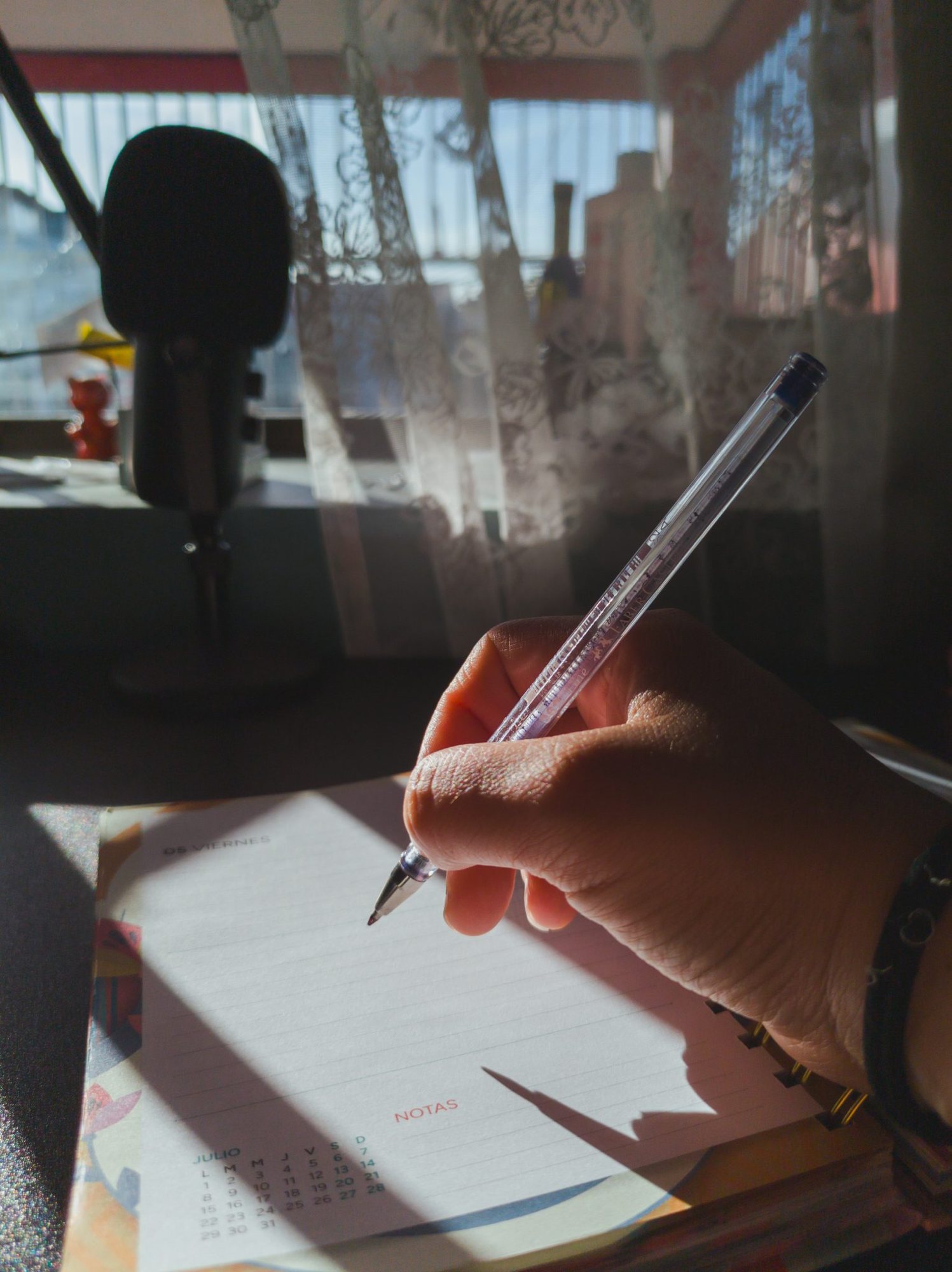
One week out: build the spine, not the script
Write six to eight questions or beats in the order you want to hit them. That is the spine. Do not write sentences you intend to say, because you will read them and it will sound like reading.
Decide who is on camera. Two people is the easiest format to make good. One person alone is the hardest, and needs the tightest preparation.
The day before
- Pick clothes in solid mid-tones. Avoid tight stripes, small checks and bright white.
- Confirm who is arriving when, and give yourself fifteen minutes of slack.
- Send your guest the spine. Surprises make people cautious, and cautious people are boring on camera.
- Charge anything you are bringing and check you have the right cable.
On the day
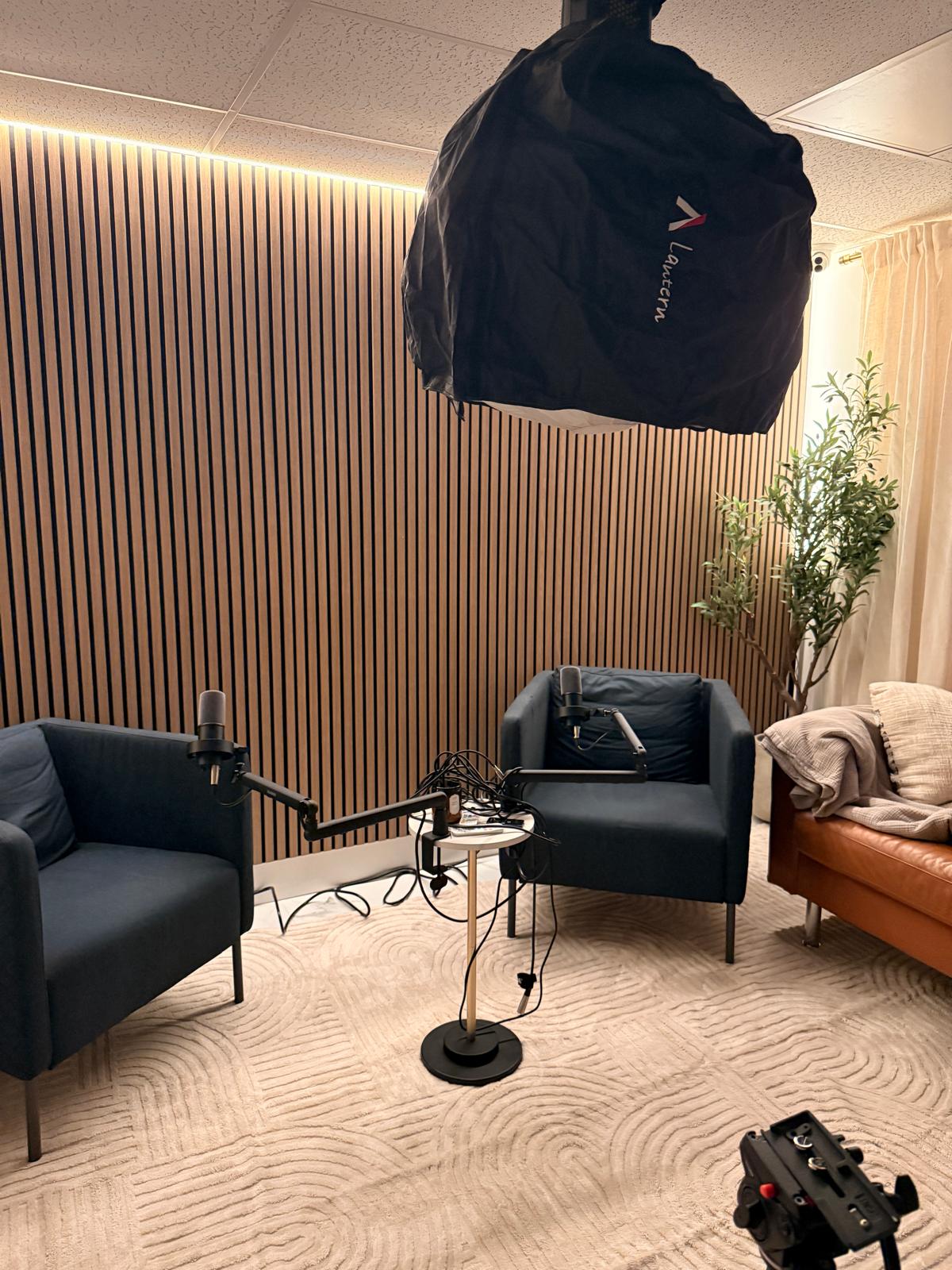
Arrive a little early and sit in the room before you start. Eat beforehand. Drink water, at room temperature rather than ice cold.
Then, when recording starts, forget all of it. The preparation exists so that you can stop thinking about logistics and pay attention to the person in front of you. That is the entire point of doing it in advance.
The thing most people get wrong
Over-preparing the words and under-preparing the purpose. A perfectly scripted episode with no clear reason to exist is worse than a rough one that knows exactly who it is for.
Two weeks out, in more detail
Deciding the purpose sounds abstract until you see how differently each one plays out.
- Building an audience. Favours a guest, a strong opening, and clips. Length is flexible.
- Warming up leads. Favours depth over hooks. Answer the questions people ask before they buy.
- Sales enablement. Short, specific, and made to be sent to one person at a time. Rarely needs a guest at all.
Pick one. An episode trying to do all three usually does none of them, and it shows in the first two minutes.
Writing a spine that survives contact
Six to eight beats, in order, each written as a question you would genuinely ask out loud. Not topics. Questions.
Then put a single sentence at the top of the page: what someone should take away. When the conversation drifts, that sentence tells you whether the drift is interesting or just a detour.
The spine exists so you can abandon it confidently.
Preparing a guest without over-preparing them
Send the spine, the length, and who else will be in the room. That is it.
Do not send the exact questions. A guest who has written answers will read them, and read answers sound nothing like conversation. The goal is a guest who knows the territory and has not rehearsed the route.
Wardrobe, in one paragraph
Solid mid-tones. Avoid pure white, which blows out, and avoid tight stripes or small checks, which shimmer on video. Bring a second option if you are recording more than one episode, because identical clothing across a batch makes it obvious you filmed everything in one afternoon.
The day itself
Arrive earlier than you need to. Sit in the room for five minutes before anything starts. Eat something. Drink water that is not ice cold.
Then stop preparing. Once recording starts, the preparation has done its job, and the only useful thing left is paying attention to the person in front of you.
What over-preparing looks like
Scripted sentences you are trying to remember. A running order so tight there is no room to follow a good answer. Rehearsing until the spontaneity is gone.
The tell is simple. If you are thinking about your next question while someone is answering the current one, you have prepared the wrong things. See also what to expect at your first recording session.
Preparation questions
How much should I write down?
Six to eight questions and one sentence saying what the episode is for. That is genuinely it. Anything more and you start reading; anything less and you drift without noticing.
What if I forget everything on the day?
You will not, because the spine is in front of you. And if a question goes out of your head mid-sentence, say so out loud and ask it again. The edit removes it and the recovery takes four seconds.
Should I rehearse?
Read your opening aloud once and stop there. Rehearsing a conversation removes the thing that makes it worth listening to. Preparation is about knowing the territory, not memorising the route.
How early should I arrive?
Fifteen minutes. Enough to sit down, drink something and let your pulse settle before anything is recorded. Arriving with two minutes to spare is the most common self-inflicted problem we see.
Preparation is there so that during the recording you can stop thinking about logistics entirely. That is the whole return on it.
The bottom line
Preparation is not about knowing what you will say. It is about removing everything that would otherwise be occupying your attention while someone is talking to you.
Decide the purpose, write a spine rather than a script, sort the logistics the day before, and then let all of it go once recording starts. The best moments in any session are the ones you did not plan, and you only get them if you have room to notice them.
And a final reassurance. Everyone over-prepares their first session and under-prepares their third. Somewhere around the fourth or fifth you find the level that suits you, and from then on the whole thing takes a fraction of the time it does today.
Know what you are making? Book the room. Not sure yet? Say so, and we will work it out first.